Sleep Hygiene Checklist for Adults Over 60
HealthyLivingAfter60 Editorial Team
Reviewed by the HealthyLivingAfter60 Editorial Team
Key Takeaways
- ✅ Light is Your Master Clock: Morning sunlight wakes you up; evening darkness prepares you for sleep.
- ✅ Temperature is the Trigger: A cool room is biologically required for the brain to initiate and maintain deep sleep.
- ✅ Consistency is Non-Negotiable: Waking up at the exact same time every day is the most important habit you can build.
- ✅ The Bed is Only for Sleep: Remove TVs, tablets, and worries from the bedroom to train your brain to associate the bed with rest.
'Sleep hygiene' refers to the daily habits, environmental factors, and routines that influence how well you sleep. Just as dental hygiene prevents cavities, good sleep hygiene prevents insomnia and fragmented rest.
For adults over 60, biological changes make the brain more sensitive to disruptions. Small mistakes—like a warm room or an evening cup of tea—can ruin a night's sleep. This comprehensive checklist provides actionable, evidence-based steps to optimize your days and nights for perfect sleep.
Keep your wake-up time identical all 7 days of the week.
The optimal temperature for a sleep-inducing bedroom.
The cutoff time for all caffeine consumption.
Your Daytime Checklist
Good sleep starts the moment you wake up. 1. Morning Light: Get 30 minutes of sunlight exposure within an hour of waking to halt melatonin and set your clock. 2. Consistent Wake Time: Wake up at the same time every day, regardless of how badly you slept the night before. 3. Exercise: Engage in 30 minutes of physical activity, preferably in the morning or early afternoon. 4. Caffeine Cutoff: Stop drinking coffee, tea, and caffeinated sodas by 2:00 PM. 5. Nap Smart: If you must nap, keep it under 30 minutes and before 3:00 PM.
Myth vs. Fact
Myth: If I sleep poorly during the week, I can just sleep in on the weekends to catch up.
Fact: Sleeping in on weekends creates 'social jetlag.' It shifts your circadian rhythm, guaranteeing you will have insomnia on Sunday night.
Expert Tip
From the Sleep Psychologist
Don't try to fix everything on this checklist at once. Pick the two habits you are worst at—usually screen time in bed and inconsistent wake times—and fix those first. Master them for two weeks before changing anything else.
| Bad Habit | Why It Ruins Sleep | The Hygiene Fix |
|---|---|---|
| Watching TV in bed | Blue light stops melatonin; content causes hyperarousal. | Remove the TV from the bedroom entirely. |
| Nightcaps (Alcohol) | Destroys REM sleep; causes early morning awakenings. | Switch to chamomile or herbal tea 1 hour before bed. |
| Checking the clock | Triggers anxiety and stress hormones (cortisol). | Turn the alarm clock around so you cannot see the time. |
| Warm bedroom | Prevents the core body temperature drop needed for sleep. | Use a fan, lower the thermostat, use breathable cotton sheets. |
| Irregular bedtimes | Confuses the brain's circadian pacemaker. | Set a strict wake-up time and go to bed only when sleepy. |
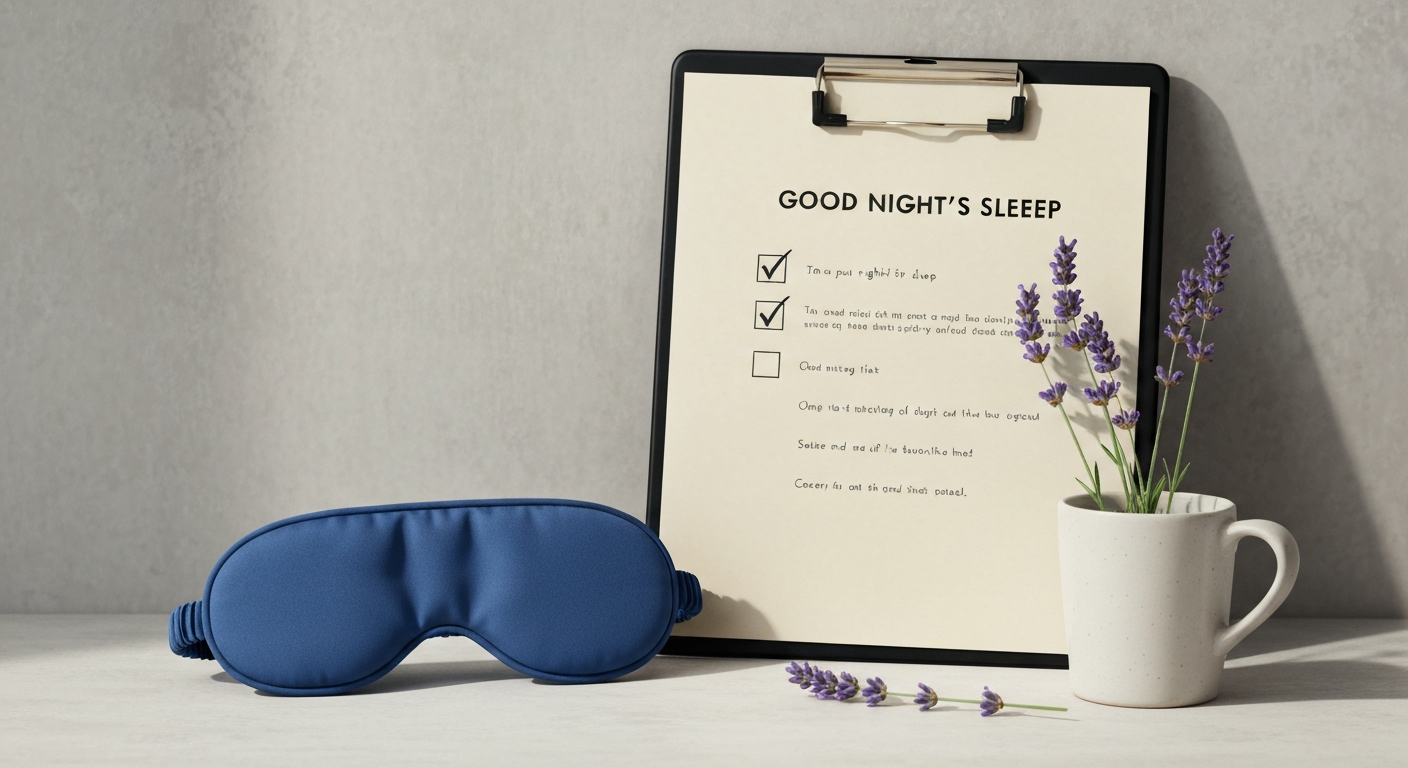
Your Evening & Bedroom Checklist
- The 3-Hour Rule: Finish heavy meals and alcohol 3 hours before bed.
- The 2-Hour Rule: Stop working, paying bills, or having stressful conversations 2 hours before bed.
- The 1-Hour Rule: Turn off all screens (TV, phone, tablet) 1 hour before bed. Read a physical book or listen to music instead.
- Cool and Dark: Set the thermostat to 65°F (18°C). Use blackout curtains or a sleep mask to block all light.
- The 20-Minute Rule: If you are in bed and awake for 20 minutes, get up. Do not lie in bed frustrated.
The Bottom Line
Sleep hygiene is not a quick fix; it is a lifestyle. By strictly controlling your light exposure, temperature, and daily routines, you create the biological environment necessary for deep, restorative sleep.
Frequently Asked Questions
What if I have to use the bathroom in the night?
Use a dim nightlight in the hallway and bathroom. Do not turn on the bright overhead lights, as this will instantly signal your brain to wake up.
Is it okay to listen to an audiobook in bed?
Yes, as long as it has a sleep timer so it doesn't play all night, and the content is not overly exciting or suspenseful.
I share a bed and my partner snores. What should I do?
Your partner needs to be evaluated for sleep apnea. In the meantime, use high-quality foam earplugs or a white noise machine to block the sound.
Do blue light blocking glasses work?
They can help if you absolutely must look at a screen in the evening, but turning the screen off entirely is vastly superior.
How long does it take for sleep hygiene to work?
If you have had bad habits for years, it can take 2 to 4 weeks of strict adherence to this checklist before your brain adapts and sleep improves.
Sources & References
- Centers for Disease Control and Prevention (CDC). (2022). Sleep Hygiene Tips.
- Sleep Foundation. (2023). What is Sleep Hygiene?
- American Academy of Sleep Medicine. (2021). Healthy Sleep Habits.
Table of Contents
Join Our Newsletter
Get weekly health tips delivered to your inbox.
HealthyLivingAfter60 Editorial Team
Our editorial team creates evidence-based educational content focused on healthy aging, nutrition, exercise, chronic disease prevention, and wellness for adults over 60. Content is reviewed for accuracy and supported by trusted medical sources.
Read our Editorial PolicyRelated Articles