Healthy Cooking Oils Compared
HealthyLivingAfter60 Editorial Team
Reviewed by the HealthyLivingAfter60 Editorial Team
Key Takeaways
- ✅ Extra Virgin Olive Oil is King: EVOO is the most extensively studied and proven oil for cardiovascular health and reducing inflammation.
- ✅ Watch the Smoke Point: Heating an oil past its smoke point destroys its nutrients and creates harmful free radicals.
- ✅ Avoid Trans Fats: Partially hydrogenated oils should be completely eliminated from your diet.
- ✅ Limit Tropical Oils: Despite popular trends, coconut and palm oils are high in saturated fat and can raise LDL cholesterol.
Walking down the cooking oil aisle can be overwhelming. From olive and avocado to coconut and canola, every bottle claims to be the healthiest choice. For adults over 60 managing cholesterol and heart health, choosing the right fat for cooking is a critical daily decision.
This guide cuts through the marketing hype to compare the most common cooking oils. We will explain which oils are best for your heart, which ones to avoid, and how to choose the right oil based on its smoke point and flavor profile.
Of the fat in olive oil is oleic acid, a highly heart-healthy monounsaturated fat.
The high smoke point of refined avocado oil, making it excellent for high-heat cooking.
The percentage of saturated fat in coconut oil (higher than butter at 63%).
Understanding Fats: The Good, The Bad, and The Heart-Healthy
The health impact of an oil depends on its fat composition. Monounsaturated fats (found in olive and avocado oils) are liquid at room temperature and are highly beneficial; they lower bad LDL cholesterol and maintain good HDL cholesterol. Polyunsaturated fats (found in walnut and flaxseed oils) are also healthy and contain essential omega-3 and omega-6 fatty acids.
Saturated fats (found in butter, lard, and coconut oil) are solid at room temperature. While the debate over saturated fat continues, major health organizations still recommend limiting them, as they consistently raise LDL cholesterol levels.
Myth vs. Fact
Myth: Canola oil is toxic and should be completely avoided.
Fact: Canola oil is a safe, heart-healthy oil that is low in saturated fat and high in monounsaturated fat. While it is highly refined, it is not 'toxic' and is recommended by the American Heart Association.
Expert Tip
From the Dietitian
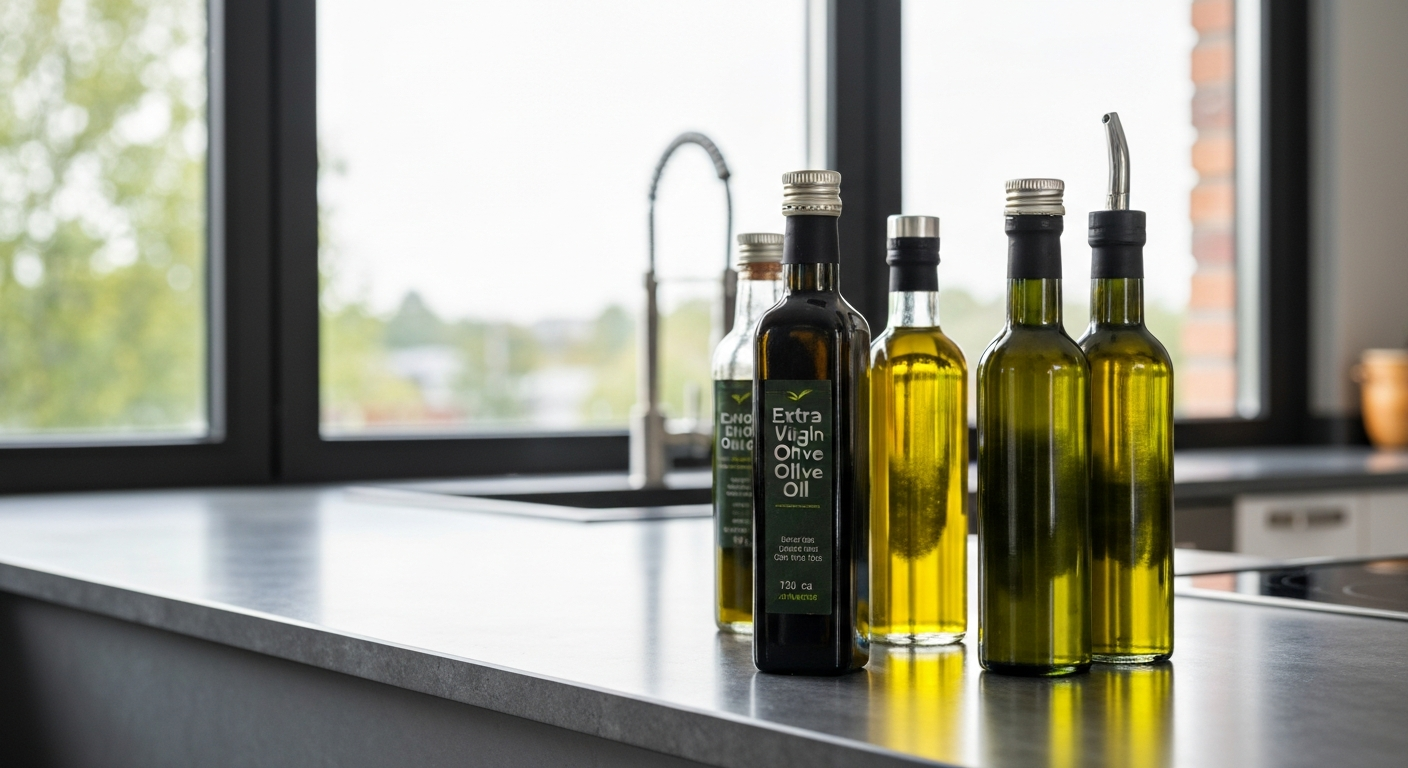
Store your healthy oils properly. Light and heat cause oils to oxidize and go rancid, destroying their heart-healthy properties. Keep olive oil and avocado oil in a cool, dark cupboard, not right next to the hot stove.
| Oil Type | Primary Fat Type | Best Uses | Heart Health Rating |
|---|---|---|---|
| Extra Virgin Olive Oil | Monounsaturated | Salads, low-heat sautéing, finishing | ⭐⭐⭐⭐⭐ (Excellent) |
| Avocado Oil | Monounsaturated | High-heat cooking, roasting, searing | ⭐⭐⭐⭐⭐ (Excellent) |
| Canola Oil | Monounsaturated | Baking, general cooking | ⭐⭐⭐⭐ (Good) |
| Walnut Oil | Polyunsaturated (Omega-3) | Salad dressings (do not heat) | ⭐⭐⭐⭐ (Good) |
| Butter | Saturated | Baking (use sparingly) | ⭐⭐ (Limit) |
| Coconut Oil | Saturated | Baking (use sparingly) | ⭐⭐ (Limit) |
Common Mistakes to Avoid
- Frying with Extra Virgin Olive Oil: EVOO has a relatively low smoke point. It's best for sautéing, dressings, and finishing, not deep frying.
- Believing Coconut Oil is a 'Superfood': Coconut oil is heavily marketed as healthy, but it is extremely high in saturated fat and raises LDL cholesterol. Treat it like butter.
- Ignoring Calories: All oils, even the healthiest ones, contain about 120 calories per tablespoon. Using too much can lead to weight gain.
- Using Rancid Oil: If an oil smells like crayons, metal, or something sour, it has oxidized. Throw it away.
- Assuming 'Light' Olive Oil is Lower in Calories: 'Light' refers to the color and flavor (it is more refined), not the calorie content. All olive oil has the same calories.
The Bottom Line
For optimal heart health, make Extra Virgin Olive Oil your primary oil for low-heat cooking and dressings, use Avocado Oil for high-heat cooking, and strictly limit solid fats like butter and coconut oil.
Frequently Asked Questions
What is a 'smoke point'?
The smoke point is the temperature at which an oil stops shimmering and starts smoking. At this point, the fat breaks down, releasing harmful free radicals and giving food a burnt, bitter flavor.
Is vegetable oil healthy?
'Vegetable oil' is usually a blend of highly refined oils (often soybean or corn oil). While they are low in saturated fat, they lack the beneficial antioxidants found in less refined oils like EVOO.
Should I keep my oils in the refrigerator?
Delicate oils high in polyunsaturated fats (like walnut, flaxseed, and sesame oil) should be refrigerated to prevent them from going rancid. Olive and avocado oils are fine in a cool, dark pantry.
What is the difference between Extra Virgin and Regular Olive Oil?
Extra Virgin (EVOO) is cold-pressed and unrefined, retaining the highest levels of antioxidants and flavor. Regular olive oil is a blend of cold-pressed and refined oils, making it more neutral in flavor and better for higher heat.
Are cooking sprays healthy?
Cooking sprays are a good way to control portion sizes and calories, as a quick spray uses much less oil than pouring from a bottle. Look for sprays where the only ingredient is the oil itself.
Is ghee better for my heart than butter?
Ghee is clarified butter. While it has a higher smoke point than regular butter and lacks lactose, it is still very high in saturated fat and should be limited for heart health.
Sources & References
- American Heart Association. (2023). Healthy Cooking Oils.
- Cleveland Clinic. (2022). Heart-Healthy Oils: What You Need to Know.
- Mayo Clinic. (2023). Dietary fats: Know which types to choose.
Table of Contents
Join Our Newsletter
Get weekly health tips delivered to your inbox.
HealthyLivingAfter60 Editorial Team
Our editorial team creates evidence-based educational content focused on healthy aging, nutrition, exercise, chronic disease prevention, and wellness for adults over 60. Content is reviewed for accuracy and supported by trusted medical sources.
Read our Editorial PolicyRelated Articles

How to Prevent Heart Disease After 60: 2026 Guide
5 min read