Best Nuts for Heart Health
HealthyLivingAfter60 Editorial Team
Reviewed by the HealthyLivingAfter60 Editorial Team
Key Takeaways
- ✅ Packed with Good Fats: Nuts are rich in monounsaturated and polyunsaturated fats, which actively lower LDL (bad) cholesterol.
- ✅ Walnuts are Unique: Walnuts are the only nut containing a significant amount of plant-based Omega-3 fatty acids (ALA).
- ✅ Portion Control is Crucial: Because they are calorie-dense, the recommended serving size is just 1 ounce (a small handful) per day.
- ✅ Raw or Dry-Roasted is Best: Avoid nuts roasted in unhealthy oils or coated in sugar, salt, or honey.
For decades, nuts were unfairly demonized because of their high fat content. Today, extensive cardiovascular research has proven the exact opposite: eating a small handful of nuts daily is one of the most effective dietary habits for protecting your heart and lowering cholesterol.
This guide explores the nutritional powerhouse that is the humble nut. We will break down which specific nuts offer the greatest cardiovascular benefits, explain the science behind how they protect your arteries, and provide practical advice on how to incorporate them into your diet without gaining weight.
The ideal daily serving size for nuts (about a small handful or 1/4 cup).
Lower risk of cardiovascular disease in people who eat nuts 5+ times a week.
Of the fats in most nuts are the heart-healthy unsaturated varieties.
How Nuts Protect the Arteries
Nuts are a complex matrix of heart-protective nutrients. First, their high unsaturated fat content helps lower LDL cholesterol and raise HDL cholesterol. Second, they are an excellent source of dietary fiber, which binds to cholesterol in the gut and prevents it from entering the bloodstream.
Furthermore, nuts contain plant sterols (which block cholesterol absorption) and L-arginine, an amino acid that helps make the walls of the arteries more flexible and less prone to blood clots. Finally, they are packed with antioxidants like Vitamin E, which prevents the oxidation of LDL cholesterol—a critical step in the formation of arterial plaque.
Myth vs. Fact
Myth: Macadamia nuts are bad for your heart because they have the most fat.
Fact: While macadamia nuts are high in fat and calories, the vast majority of that fat is monounsaturated (the same heart-healthy fat found in olive oil). Eaten in moderation, they are excellent for lipid profiles.
Expert Tip
From the Dietitian
Don't just add nuts to your current diet; use them to replace unhealthy snacks. Swap out a handful of potato chips or a cookie for a handful of almonds. This gives you the heart benefits without adding excess calories to your day.
| Nut Type | Standout Heart Benefit | Best Way to Enjoy |
|---|---|---|
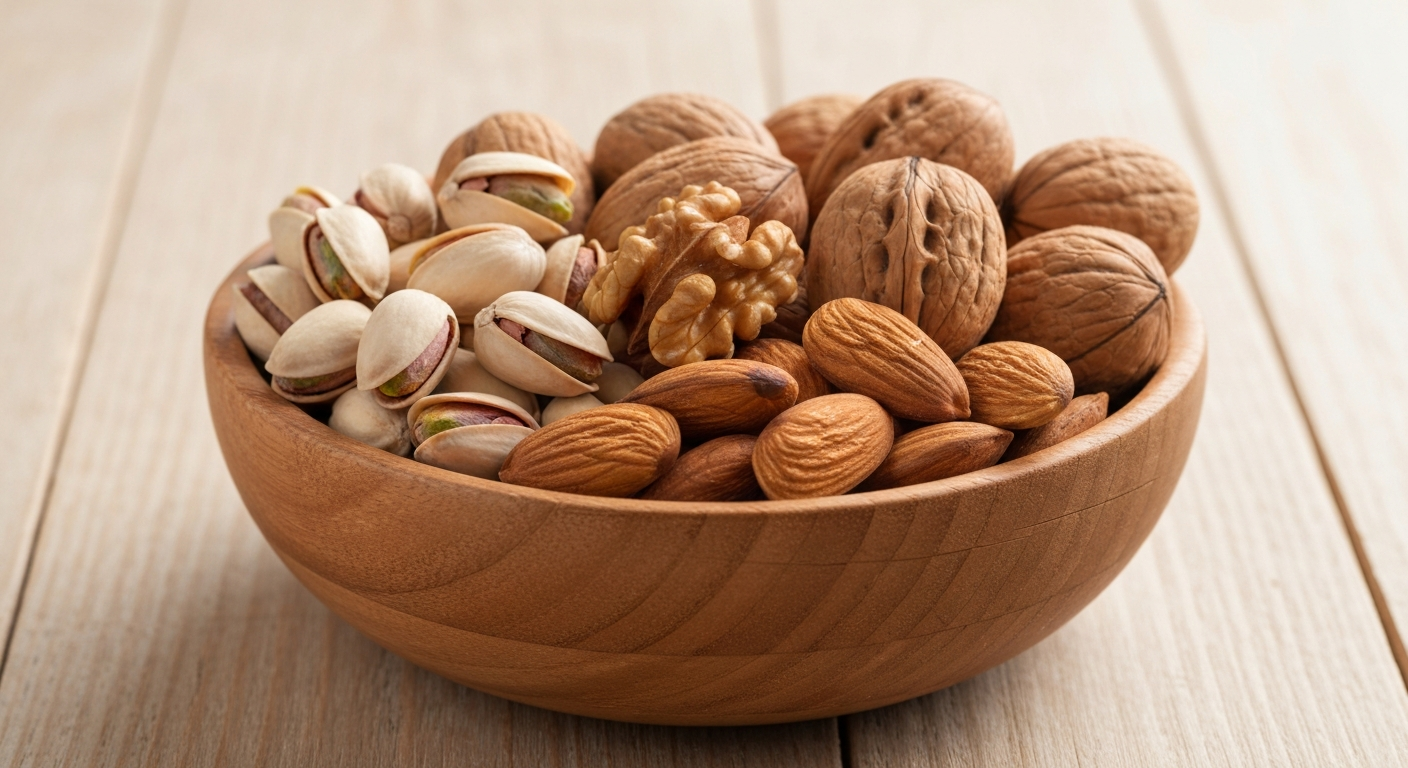
| Walnuts | Highest in plant-based Omega-3s (ALA), reduces inflammation | Sprinkled on oatmeal or salads |
| Almonds | High in Vitamin E (antioxidant) and fiber, lowers LDL | As a raw snack or sliced in yogurt |
| Pistachios | Rich in L-arginine (improves blood vessel flexibility) and lower in calories | Buy them in the shell to slow down eating |
| Pecans | Packed with antioxidants and plant sterols | Roasted with a dash of cinnamon (no sugar) |
| Macadamia Nuts | Highest in monounsaturated fats, great for lipid profiles | In moderation as a snack |
| Peanuts (Legumes) | Affordable source of protein and heart-healthy fats | Natural peanut butter on whole grain toast |
Common Mistakes to Avoid
- Eating Too Many: Nuts are very calorie-dense (about 160-200 calories per ounce). Eating them mindlessly from a large bag can lead to weight gain.
- Buying Heavily Salted Nuts: The sodium in salted nuts can negate the cardiovascular benefits by raising blood pressure. Always choose unsalted or lightly salted.
- Choosing Candied Nuts: Honey-roasted or chocolate-covered nuts are loaded with added sugars, which promote inflammation and raise triglycerides.
- Avoiding Them Due to Fat Fear: Skipping nuts because they are 'high in fat' deprives your heart of essential, protective nutrients.
- Ignoring Nut Butters: Peanut or almond butter is great, but many commercial brands add sugar and hydrogenated oils (trans fats). Buy natural versions where the only ingredient is the nut.
The Bottom Line
Nuts are nature's cardiovascular supplement. By eating just one ounce of raw or dry-roasted, unsalted nuts every day, you provide your heart with a powerful blend of healthy fats, fiber, and antioxidants that actively fight heart disease.
Frequently Asked Questions
Are peanuts as healthy as tree nuts?
Yes. Even though peanuts are technically legumes, their nutritional profile is very similar to tree nuts, and large studies show they offer the same cardiovascular benefits at a lower cost.
What does 'dry roasted' mean?
Dry roasted means the nuts were roasted without added oils. This is healthier than nuts roasted in cheap, refined vegetable oils.
Is it better to eat nuts raw or roasted?
Both are healthy. Roasting can slightly reduce some antioxidant levels, but the difference is minimal. The most important factor is avoiding added salt and sugar.
I have diverticulitis; can I eat nuts?
Historically, doctors told patients with diverticular disease to avoid nuts. However, modern gastroenterology guidelines state that nuts do not increase the risk of diverticulitis attacks and are safe to eat.
How should I store nuts?
Because of their high fat content, nuts can go rancid if exposed to heat and light. Store them in an airtight container in the refrigerator or freezer to keep them fresh.
Can I get the same benefits from nut milks?
Not usually. Commercial almond or cashew milks are mostly water and often have the fiber and healthy fats strained out. Whole nuts or natural nut butters are far superior for heart health.
Sources & References
- American Heart Association. (2023). Are nuts healthy?
- Mayo Clinic. (2022). Nuts and your heart: Eating nuts for heart health.
- Harvard Health Publishing. (2021). Why nutritionists are crazy about nuts.
Table of Contents
Join Our Newsletter
Get weekly health tips delivered to your inbox.
HealthyLivingAfter60 Editorial Team
Our editorial team creates evidence-based educational content focused on healthy aging, nutrition, exercise, chronic disease prevention, and wellness for adults over 60. Content is reviewed for accuracy and supported by trusted medical sources.
Read our Editorial PolicyRelated Articles

How to Prevent Heart Disease After 60: 2026 Guide
8 min read