Best Exercises for a Healthy Heart After 60
HealthyLivingAfter60 Editorial Team
Reviewed by the HealthyLivingAfter60 Editorial Team
Key Takeaways
- ✅ Aerobic Exercise is Essential: Activities that raise your heart rate, like brisk walking or swimming, directly strengthen the heart muscle.
- ✅ Don't Skip Strength Training: Lifting light weights reduces the burden on your heart during daily activities and prevents muscle loss.
- ✅ Flexibility Matters: Stretching and balance exercises prevent falls, keeping you active and capable of cardiovascular workouts.
- ✅ Consistency Over Intensity: Regular, moderate exercise is far more beneficial for the heart than occasional, intense workouts.
Staying active is arguably the single most effective way to strengthen your heart muscle, lower blood pressure, and maintain cardiovascular health as you age. However, the type of exercise that worked in your 30s might not be appropriate—or safe—in your 60s and beyond, especially if you have joint issues or are just starting out.
This guide breaks down the safest and most effective exercises for older adults. From low-impact aerobics to the crucial role of resistance training, you will learn how to build a balanced, heart-healthy routine that protects your joints while maximizing cardiovascular benefits.
Recommended weekly moderate aerobic exercise.
Minimum days per week recommended for strength training.
Reduction in heart disease risk associated with regular physical activity.
The Three Pillars of Heart-Healthy Exercise
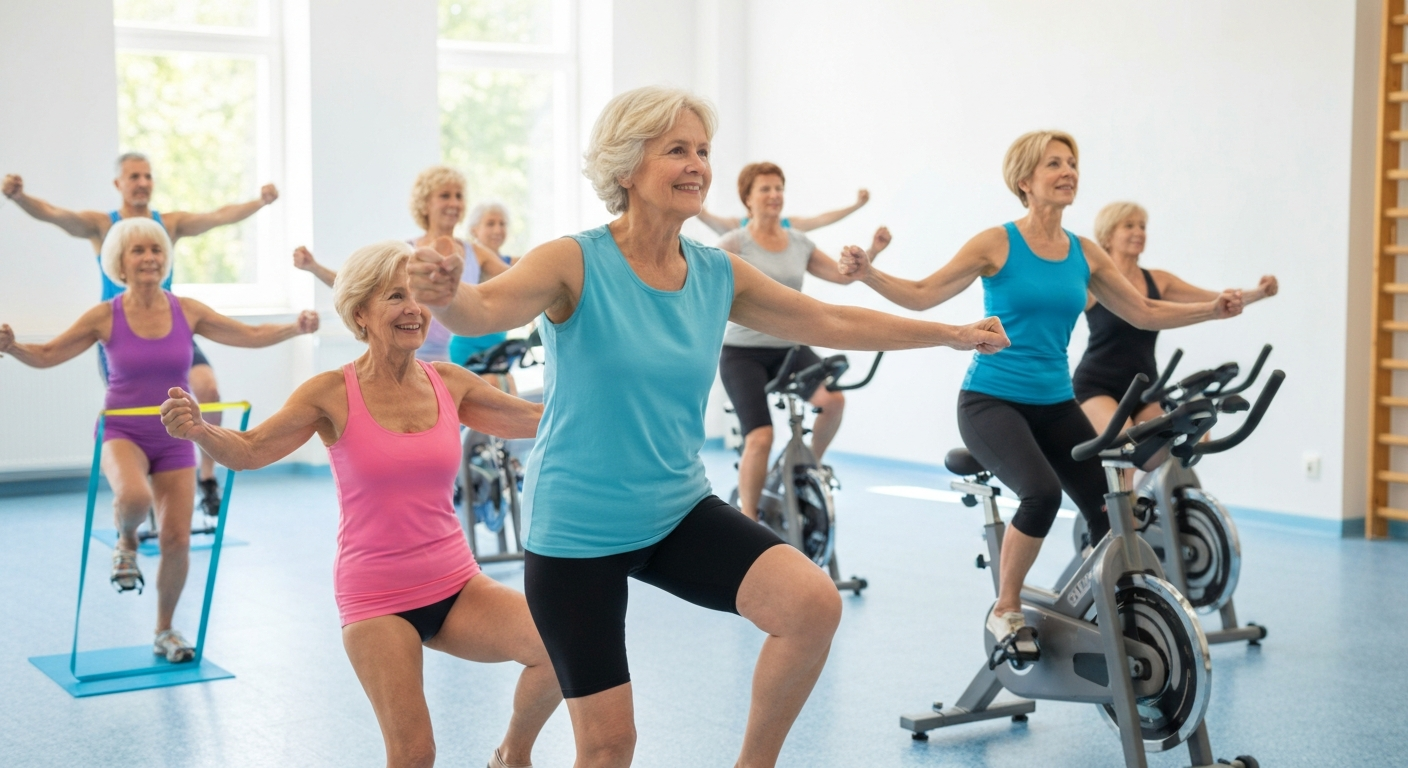
A complete heart-healthy fitness routine for older adults must include three components: aerobic exercise, strength training, and flexibility/balance work. Aerobic exercise (cardio) improves circulation and lowers blood pressure. Strength training builds lean muscle mass, which helps your body burn calories more efficiently and lowers LDL cholesterol.
Flexibility and balance exercises, such as Tai Chi or yoga, don't directly raise your heart rate, but they are crucial for preventing injuries and falls, ensuring you can continue your aerobic and strength routines safely.
Myth vs. Fact
Myth: If I have heart disease, I shouldn't exercise because it will strain my heart.
Fact: The opposite is true. Under medical supervision (like cardiac rehab), regular, tailored exercise is one of the most effective treatments for strengthening a damaged heart and preventing future events.
Expert Tip
From the Exercise Physiologist
Use the 'Talk Test' to gauge your aerobic intensity. You should be working hard enough that you are breathing heavily, but you should still be able to carry on a brief conversation. If you can sing, you need to work harder. If you can't speak a full sentence, slow down.
| Exercise Type | Best Examples for Seniors | Primary Heart Benefit |
|---|---|---|
| Low-Impact Aerobic | Brisk walking, swimming, cycling | Lowers resting heart rate and blood pressure |
| Strength Training | Resistance bands, light dumbbells, bodyweight squats | Improves cholesterol and glucose metabolism |
| Flexibility | Stretching, gentle yoga | Reduces arterial stiffness |
| Balance | Tai Chi, single-leg stands | Prevents falls, maintaining ability to exercise |
Common Mistakes to Avoid
- Skipping the Warm-Up: Failing to warm up forces the heart to adapt too quickly, which can be dangerous for older adults.
- Holding Your Breath: Especially during strength training, holding your breath causes dangerous spikes in blood pressure.
- Ignoring Pain: 'No pain, no gain' is a dangerous myth. Stop immediately if you feel chest pain, severe shortness of breath, or dizziness.
- Focusing Only on Cardio: Neglecting strength training leads to muscle loss (sarcopenia), which slows metabolism.
- Inconsistency: Exercising intensely one day a week is less beneficial (and riskier) than exercising moderately five days a week.
How Exercise Reduces Arterial Stiffness
As we age, our blood vessels naturally lose some of their elasticity, a condition known as arterial stiffness. This forces the heart to work harder to pump blood, raising blood pressure and increasing the risk of heart disease. Regular aerobic exercise acts as a powerful antidote. When you engage in activities like brisk walking or swimming, the increased blood flow stimulates the inner lining of your blood vessels (the endothelium) to release nitric oxide. Nitric oxide helps blood vessels relax and widen, reducing stiffness and keeping your cardiovascular system youthful and flexible.
The Importance of Recovery and Rest Days
For adults over 60, recovery is just as important as the exercise itself. Your heart and muscles need time to repair and grow stronger after a workout. Exercising intensely every single day without rest can lead to overtraining, fatigue, and an increased risk of injury or cardiac strain. Incorporate active recovery days into your routine, focusing on gentle stretching, restorative yoga, or a leisurely stroll rather than a vigorous workout. Always listen to your body; if you feel profoundly exhausted, it's a sign you need a rest day.
Exercising with Existing Heart Conditions
A diagnosis of heart disease, past heart attack, or atrial fibrillation does not mean you should stop exercising. In fact, structured physical activity is a cornerstone of recovery. However, it must be approached safely. Cardiac rehabilitation programs are highly recommended, as they provide medically supervised exercise tailored to your specific condition. If you are exercising independently, always start with a prolonged warm-up, avoid holding your breath during exertion, and communicate regularly with your cardiologist about your fitness routine.
The Bottom Line
The best exercise for your heart is the one you will actually do consistently. Combine low-impact aerobic activities like walking or swimming with light strength training to build a resilient, healthy cardiovascular system.
Frequently Asked Questions
How do I start exercising if I haven't been active in years?
Start very slowly. Begin with 5 to 10 minutes of gentle walking per day. Gradually increase the duration by a few minutes each week until you reach 30 minutes a day.
Is it safe to exercise outside in the heat or cold?
Extreme temperatures put extra strain on the heart. If it is very hot, humid, or freezing outside, opt for indoor exercises like mall walking, a stationary bike, or a home workout video.
What should my target heart rate be?
For moderate exercise, your target heart rate should generally be 50% to 70% of your maximum heart rate. However, if you are on medications like beta-blockers, your heart rate won't rise normally, so use the 'Talk Test' instead.
Are resistance bands as good as weights?
Yes, resistance bands are excellent for older adults. They provide a smooth, continuous tension that builds muscle effectively while being very gentle on the joints.
Should I exercise every day?
Aim for aerobic exercise most days of the week (at least 5). However, give your muscles at least 48 hours to recover between strength training sessions.
When should I stop exercising and call a doctor?
Stop immediately and seek medical help if you experience chest pain or pressure, pain radiating down your arm or jaw, severe shortness of breath, dizziness, or an irregular, racing heartbeat.
Is it better to exercise in the morning or evening for heart health?
The best time is the time you can stick to consistently. However, some studies suggest morning exercise may be slightly better for blood pressure management, while afternoon exercise might be optimal for peak performance.
Can I break my daily exercise into smaller chunks?
Absolutely. Three 10-minute walks spread throughout the day provide the same cardiovascular benefits as one continuous 30-minute walk.
What should I eat before exercising?
A light, easily digestible carbohydrate snack, such as half a banana or a small piece of toast, about 30-60 minutes before exercising provides energy without causing digestive discomfort.
Sources & References
- American Heart Association. (2023). Fitness Basics.
- National Institute on Aging. (2022). Exercise and Physical Activity.
- Mayo Clinic. (2023). Aerobic exercise: Top 10 reasons to get physical.
Table of Contents
Join Our Newsletter
Get weekly health tips delivered to your inbox.
HealthyLivingAfter60 Editorial Team
Our editorial team creates evidence-based educational content focused on healthy aging, nutrition, exercise, chronic disease prevention, and wellness for adults over 60. Content is reviewed for accuracy and supported by trusted medical sources.
Read our Editorial PolicyRelated Articles

How to Prevent Heart Disease After 60: 2026 Guide
4 min read