Best Blood Pressure Monitors for Seniors (2026): Top Picks for Accuracy and Ease of Use
HealthyLivingAfter60 Editorial Team
Reviewed by the HealthyLivingAfter60 Editorial Team
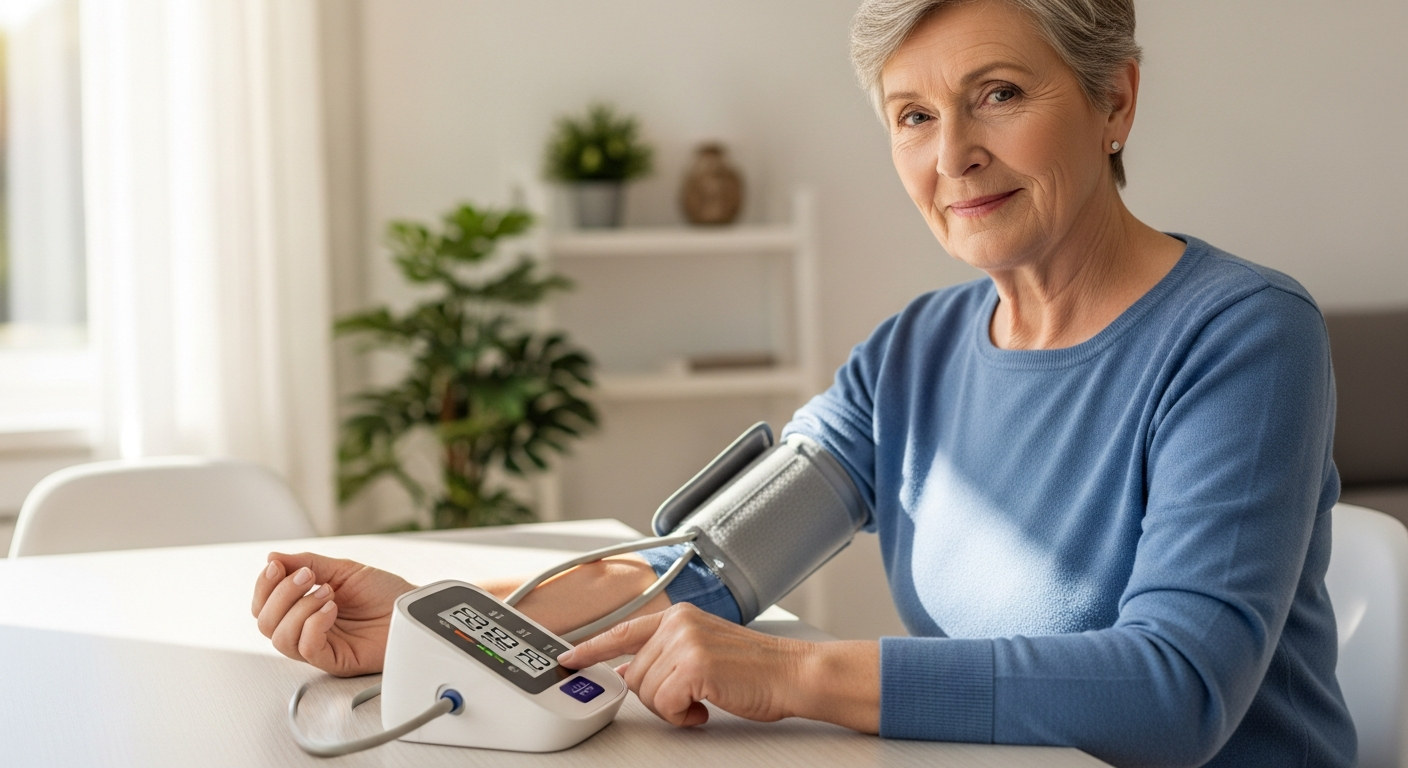
Key Takeaways
- ✅ Home blood pressure monitoring is crucial for adults over 60 to prevent stroke, heart attack, and manage hypertension.
- ✅ Upper arm monitors are generally recommended over wrist monitors for superior clinical accuracy.
- ✅ Cuff size matters: an incorrect cuff size is the leading cause of inaccurate home readings.
- ✅ The Omron Platinum and Omron Evolv consistently rank highest for accuracy, memory storage, and ease of use.
- ✅ Always rest for 5 minutes before taking a reading, and keep your arm supported at heart level.
Disclosure: This article may contain affiliate links. If you purchase through these links, HealthyLivingAfter60.com may earn a small commission at no additional cost to you.
Monitoring your blood pressure at home is one of the most proactive and empowering steps you can take for your cardiovascular health. For adults over 60, regular tracking provides vital information to your healthcare provider, helps detect dangerous spikes, and ensures your current medications are working effectively.
However, with countless options on the market, finding a reliable device can be overwhelming. Some monitors are overly complicated, while others suffer from poor accuracy or uncomfortable cuffs. In this comprehensive 2026 guide, we review the best blood pressure monitors specifically designed for seniors, focusing on accuracy, ease of use, large displays, and comfortable cuff sizing.
Quick Answer
The best blood pressure monitor for seniors is the Omron Platinum, due to its clinical-grade accuracy, dual-display comparison feature, and comfortable D-ring cuff. For ease of use and portability, the tubeless Omron Evolv is highly recommended. Always choose an upper arm monitor over a wrist monitor for the most reliable readings.
Target healthy blood pressure for most adults
Space needed between the cuff and your elbow
Rest required before taking an accurate reading
Why Seniors Should Monitor Blood Pressure
Hypertension, or high blood pressure, is often called the "silent killer" because it typically has no symptoms until significant damage has been done to the heart, kidneys, or brain. As we age, our blood vessels naturally lose some of their elasticity, increasing the risk of hypertension.
Monitoring at home helps combat "white coat syndrome"—a phenomenon where anxiety at the doctor's office causes your blood pressure to spike artificially. Home monitoring provides your physician with a realistic, longitudinal view of your cardiovascular health.
Myth vs. Fact
Myth: Wrist monitors are just as accurate as upper arm monitors.
Fact: Upper arm monitors are significantly more accurate. Wrist monitors are highly sensitive to the position of your arm and are only recommended if an upper arm cuff cannot be used due to physical limitations.
Upper Arm vs Wrist Monitors
When shopping for a monitor, you'll primarily choose between upper arm and wrist models. For seniors, the distinction is critical.
- Upper Arm Monitors: These are the gold standard recommended by the American Heart Association. They are inherently more accurate because they measure the brachial artery, which is closer to the heart and less affected by arm positioning.
- Wrist Monitors: While more compact and easier to put on (especially for those with arthritis or limited mobility), wrist monitors are highly sensitive to body position. Your wrist must be perfectly aligned with your heart; otherwise, the reading will be inaccurate.
| Monitor Model | Best For | Bluetooth/App | Price Range |
|---|---|---|---|
| Omron Platinum | Overall Accuracy & Features | Yes | $$$ |
| Omron Evolv | Portability & Ease of Use | Yes | $$$ |
| Withings BPM Connect | Smart Wi-Fi Syncing | Yes | $$$ |
| Beurer BM55 | Large Display | No | $$ |
| Greater Goods | Budget-Friendly | No | $ |
How to Choose a Blood Pressure Monitor
Before purchasing, consider these essential features tailored for older adults:
- Clinical Validation: Ensure the device is cleared by the FDA and independently validated for accuracy.
- Cuff Size: Measure your upper arm circumference. A cuff that is too tight will artificially inflate your reading, while a loose cuff will read too low.
- Display Quality: Look for large, high-contrast, backlit displays that are easy to read without glasses.
- Ease of Use: One-button operation is ideal. Complex menus can be frustrating and deter daily use.
- Memory Storage: Choose a device that stores at least 50-100 readings so you can easily share the history with your doctor.
Top Picks: Best Blood Pressure Monitors for Seniors
🏆 OUR TOP PICK: Omron Platinum Blood Pressure Monitor
Why It's Our Top Recommendation
Omron is widely regarded as the most trusted brand by cardiologists. The Platinum model stands out because it offers dual-display technology, allowing you to easily compare your current reading with your previous one on a large, high-contrast backlit screen. It takes the guesswork out of tracking your cardiovascular health.
- Key Features: Dual-display, stores 200 readings for two users, Advanced Averaging technology, irregular heartbeat detection, includes AC adapter.
- Pros: Clinical-grade accuracy, extremely easy to read, comfortable D-ring cuff, seamless app connectivity.
- Cons: Larger footprint, premium price point.
- Best For: Seniors who want the most comprehensive data, maximum accuracy, and an easy-to-read display.
➡️ Check Current Price on Amazon
2. Omron Evolv Wireless Upper Arm Monitor
Best for Ease of Use and Portability
The Evolv eliminates the traditional tube and base unit. The entire monitor is built directly onto the cuff, making it incredibly easy to put on and take off with one hand.
- Pros: Tubeless design prevents tangles, highly portable, excellent companion app, fits a wide range of arm sizes.
- Cons: No onboard memory display (must use the app to view history), runs solely on batteries.
- Best For: Tech-savvy seniors who travel frequently or those who struggle with traditional arm cuffs.
- Rating: 4.8/5
Search Amazon for the latest availability and pricing.
3. Withings BPM Connect
Best Smart Monitor
Withings provides a sleek, modern device that syncs seamlessly via Wi-Fi and Bluetooth. It automatically sends your readings to your smartphone, making it effortless to share reports with your physician.
- Pros: Wi-Fi syncing means you don't need your phone nearby, rechargeable battery lasts up to 6 months, color-coded feedback.
- Cons: Minimalist display on the device itself, requires initial smartphone setup.
- Best For: Seniors who prefer digital tracking and want an easy way to email reports to their doctor.
- Rating: 4.7/5
Search Amazon for the latest availability and pricing.
4. Greater Goods Blood Pressure Monitor
Best Budget Option
You don't need to spend a fortune for accuracy. The Greater Goods monitor is highly rated, straightforward, and provides everything you need without the premium price tag.
- Pros: Very affordable, large screen, simple one-button operation, includes a comfortable cuff.
- Cons: Lacks advanced features like Bluetooth syncing, basic memory storage.
- Best For: Seniors on a budget who want a reliable, no-frills device.
- Rating: 4.6/5
Search Amazon for the latest availability and pricing.
5. Beurer BM55
Best for Large Displays
The Beurer BM55 features an exceptionally large, illuminated display and a patented resting indicator that ensures you are calm enough for an accurate reading.
- Pros: Massive numbers, resting indicator improves accuracy, PC connectivity.
- Cons: Cuff can be slightly rigid.
- Best For: Those with vision impairments who need the largest possible text.
- Rating: 4.5/5
Search Amazon for the latest availability and pricing.
Proper Technique: Common Mistakes When Measuring
Even the most expensive monitor will provide inaccurate results if used incorrectly. Avoid these common pitfalls:
- Not Resting: Sit quietly for at least 5 minutes before taking a reading.
- Talking: Do not talk or text while the machine is inflating.
- Wrong Arm Position: Rest your arm on a table so the cuff is at the same level as your heart.
- Crossed Legs: Keep both feet flat on the floor. Crossing your legs can raise your systolic pressure by 2 to 8 points.
- Full Bladder: A full bladder can add up to 10 points to your reading. Always use the restroom first.
- Over clothing: Always place the cuff on a bare arm, never over a sleeve.
Cuff Sizing Guide
Using the wrong cuff size is the most common cause of inaccurate readings. A cuff that is too small can artificially inflate your reading, while one that is too large can result in a reading that is artificially low.
To find your size, wrap a flexible measuring tape around the middle of your upper arm (between the shoulder and the elbow).
- Small: 8.7 to 10.2 inches (22 to 26 cm)
- Standard/Medium: 10.6 to 13.4 inches (27 to 34 cm)
- Large: 13.8 to 17.3 inches (35 to 44 cm)
- Extra Large: 17.7 to 20.5 inches (45 to 52 cm)
Always verify the cuff dimensions included with your chosen monitor before purchasing.
Medicare and Blood Pressure Monitors
Many seniors ask if Medicare covers the cost of a home blood pressure monitor. Generally, Medicare Part B only covers a home monitor if you are receiving hemodialysis in your home or if your doctor requires ambulatory blood pressure monitoring for suspected "white coat hypertension." However, some Medicare Advantage (Part C) plans offer over-the-counter (OTC) allowances that can be used to purchase a monitor. Check with your specific plan provider for details.
The Bottom Line
Investing in a reliable home blood pressure monitor is one of the best decisions for your long-term cardiovascular health. The Omron Platinum and Omron Evolv remain our top recommendations for their unmatched clinical accuracy and senior-friendly design. Remember, the most accurate device is the one you use consistently and correctly.
Frequently Asked Questions
What is a normal blood pressure range for seniors?
The American Heart Association generally recommends a target of less than 120/80 mm Hg. However, for some adults over 65, physicians may set a slightly higher target (like 130/80) depending on overall health, frailty, and medication side effects. Always ask your doctor what your specific target should be.
How do I know what cuff size I need?
Use a flexible measuring tape to measure the circumference of your upper arm midway between your shoulder and elbow. Most standard cuffs fit arms 9 to 17 inches. If your arm is larger, you will need to purchase a 'Large' or 'Extra Large' cuff.
How often should I replace my blood pressure monitor?
Most digital monitors have a lifespan of about 3 to 5 years. If the cuff starts leaking air or the readings become erratic, it's time for a replacement.
Can I use my blood pressure monitor if I have an irregular heartbeat (arrhythmia)?
Many modern monitors, like the Omron series, have an irregular heartbeat detector. However, conditions like Atrial Fibrillation (AFib) can cause digital monitors to give error readings. If you have AFib, consult your doctor about specialized monitors.
Should I take my blood pressure in the morning or at night?
It is often recommended to take it twice a day: once in the morning before eating or taking medications, and once in the evening. Take two readings each time, spaced one minute apart, and record the average.
Sources & References
- American Heart Association (AHA) - Monitoring Your Blood Pressure at Home
- Centers for Disease Control and Prevention (CDC) - High Blood Pressure
- National Institute on Aging (NIA) - High Blood Pressure and Older Adults
- American Medical Association (AMA) - Validated Device Listing (VDL)
Table of Contents
- Why Seniors Should Monitor Blood Pressure
- Upper Arm vs Wrist Monitors
- How to Choose a Blood Pressure Monitor
- Top Picks: Best Blood Pressure Monitors for Seniors
- Proper Technique: Common Mistakes When Measuring
- Cuff Sizing Guide
- Medicare and Blood Pressure Monitors
- Frequently Asked Questions
- Sources & References
Join Our Newsletter
Get weekly health tips delivered to your inbox.
HealthyLivingAfter60 Editorial Team
Our editorial team creates evidence-based educational content focused on healthy aging, nutrition, exercise, chronic disease prevention, and wellness for adults over 60. Content is reviewed for accuracy and supported by trusted medical sources.
Read our Editorial PolicyRelated Articles

How to Prevent Heart Disease After 60: 2026 Guide
6 min read