Using a Continuous Glucose Monitor (CGM)
HealthyLivingAfter60 Editorial Team
Reviewed by the HealthyLivingAfter60 Editorial Team
Key Takeaways
- ✅ Real-Time Data: CGMs provide a blood sugar reading every 1-5 minutes directly to your smartphone or receiver.
- ✅ Trend Arrows: The most valuable feature of a CGM isn't just the current number, but the arrows showing where your blood sugar is heading.
- ✅ Time in Range (TIR): The new gold standard for diabetes management is spending at least 70% of your day between 70-180 mg/dL.
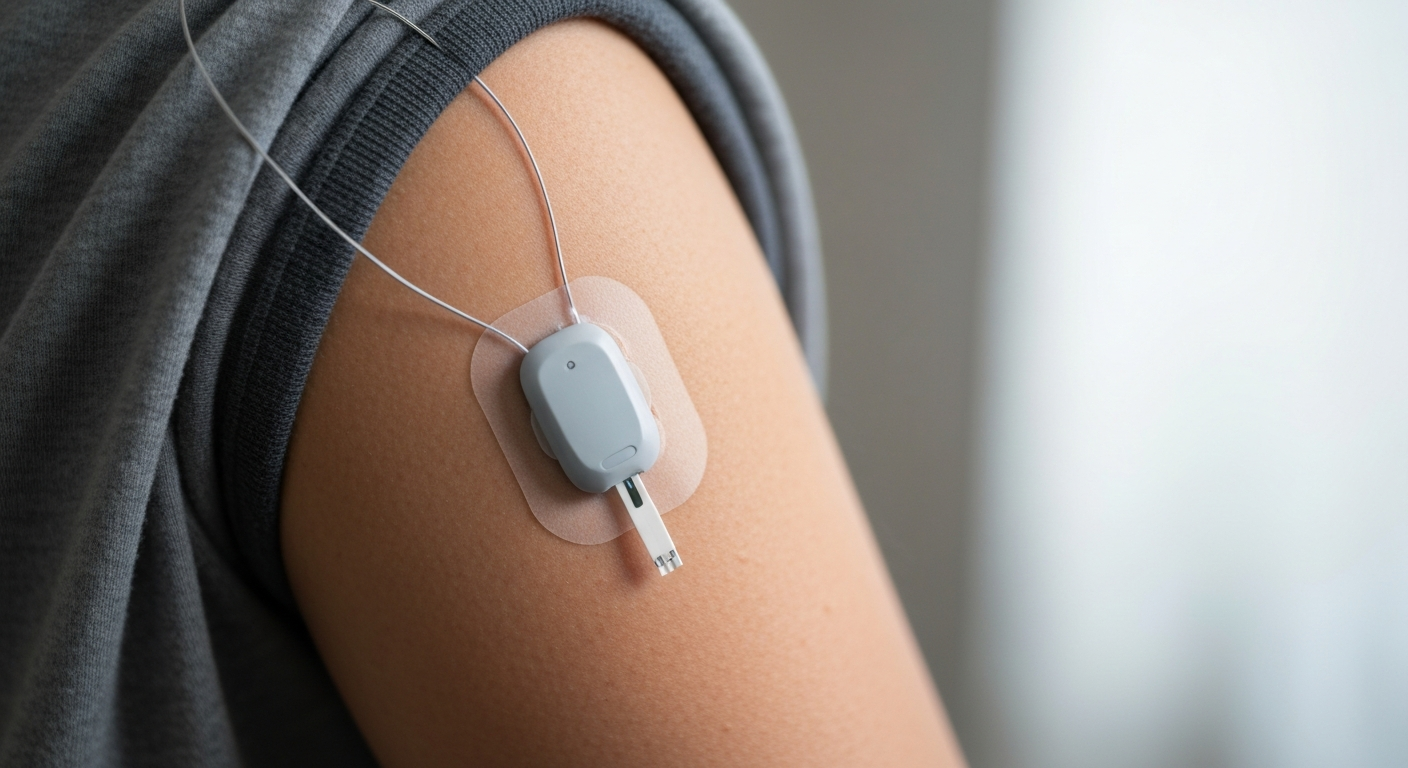
- ✅ Painless Application: Modern sensors are applied at home with a simple click and last 10 to 14 days.
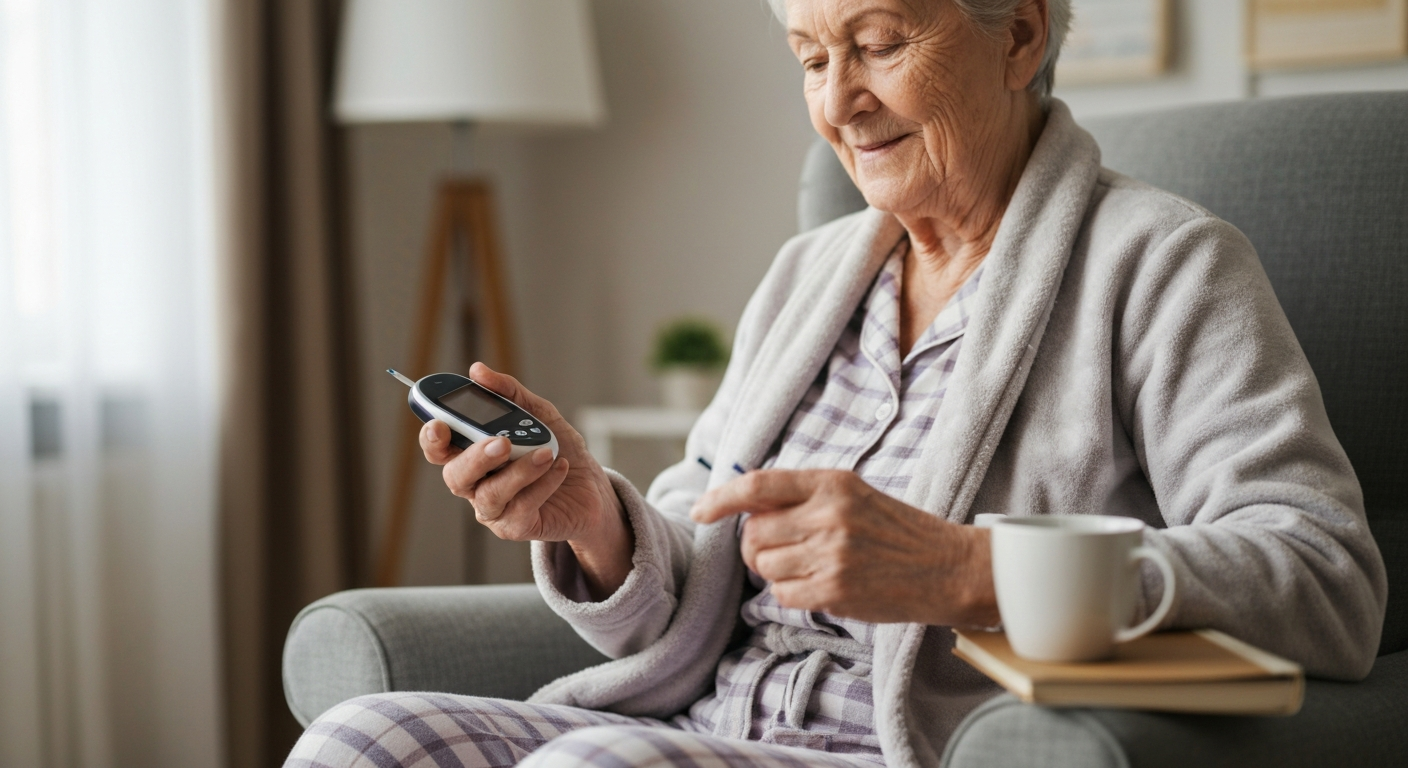
A Continuous Glucose Monitor (CGM) is a small, wearable sensor that tracks your blood sugar day and night. For adults over 60 managing diabetes or prediabetes, a CGM replaces the pain of frequent fingersticks with real-time, actionable data.
In this guide, you will learn how to read CGM graphs, set appropriate alarms, and interpret the data to revolutionize your approach to blood sugar management. Transitioning to a CGM is often described by patients as turning on the headlights while driving at night.
Target Time in Range (TIR) for most adults.
Lifespan of most modern CGM sensors before needing replacement.
CGM use is clinically proven to lower A1C without increasing hypoglycemia.
How a CGM Works
A CGM consists of a tiny wire sensor inserted just under the skin. It measures glucose in the interstitial fluid (the fluid between your cells), not directly in the blood. A transmitter sends this data via Bluetooth to an app on your phone or a dedicated reader device.
Because it measures interstitial fluid, there is a slight delay (usually 5 to 10 minutes) compared to a fingerstick blood test. If your blood sugar is dropping rapidly, a fingerstick will show the low sooner than a CGM.
Myth vs. Fact
Myth: If I have a CGM, I never have to do a fingerstick again.
Fact: While CGMs drastically reduce fingersticks, you should still do one if your symptoms don't match the CGM reading, or if the CGM shows a rapidly changing arrow during a severe low.
Expert Tip
From the Diabetes Educator
Don't obsess over every single number. The most important part of a CGM is the trend arrow. If your blood sugar is 110 mg/dL with a straight arrow, you are fine. If it is 110 mg/dL with two arrows pointing straight down, you need to eat a fast-acting carb immediately.
| CGM Metric | What It Means | Typical Goal | Action to Take |
|---|---|---|---|
| Time in Range (TIR) | Percentage of day between 70-180 mg/dL | More than 70% | Maintain current habits |
| Time Below Range (TBR) | Percentage of day below 70 mg/dL | Less than 4% | Reduce insulin/meds (with doctor) |
| Time Above Range (TAR) | Percentage of day above 180 mg/dL | Less than 25% | Adjust diet or exercise |
| GMI | Estimated A1C based on CGM data | Below 7.0% | Review overall management plan |
Common Mistakes to Avoid
- Overreacting to spikes: Taking extra insulin immediately after a meal spike before the first dose has time to work (insulin stacking).
- Ignoring the delay: Treating a low blood sugar, checking the CGM 5 minutes later, seeing it's still low, and eating more. (The CGM is 10 minutes behind; use a fingerstick to confirm recovery).
- Compression lows: Sleeping on the sensor, which pushes fluid away and causes a false low alarm in the middle of the night.
- Alarm fatigue: Setting alarms too tight (e.g., alarming at 140 mg/dL) and getting so annoyed you turn the device off.
Practical Examples
The Fingerstick Blindspot
Checking blood sugar at 8 AM (110) and 12 PM (115). It looks perfect. But without a CGM, you missed the massive 250 mg/dL spike that occurred at 10 AM after eating oatmeal.
The CGM Advantage
Eating oatmeal, watching the CGM arrow go straight up at 9 AM, and immediately taking a 15-minute walk to blunt the spike before it hits 180 mg/dL.
Medical Authority & Recommendations
Who should use this advice? Anyone with diabetes, especially those on insulin or prone to hypoglycemia.
Who should avoid it? No one. CGMs are widely considered beneficial for all diabetes types.
What current research shows: The American Diabetes Association now recommends CGMs for all adults taking insulin, and increasingly for those on oral medications, because they significantly improve Time in Range.
Understanding Trend Arrows
Trend arrows tell you how fast your glucose is changing:
- Straight Arrow (→): Glucose is stable.
- Angled Arrow (↗ or ↘): Glucose is rising or falling slowly.
- Straight Up/Down (↑ or ↓): Glucose is changing rapidly. Action is required.
The Bottom Line
A CGM is like turning on the headlights while driving at night. It provides the visibility needed to make immediate, informed decisions about your diet, exercise, and medication.
Frequently Asked Questions
Can I shower or swim with a CGM?
Yes, most modern CGMs (like Freestyle Libre and Dexcom) are water-resistant and can be worn in the shower, bath, or while swimming.
Does Medicare cover CGMs?
Medicare covers CGMs for individuals who take insulin or have a history of problematic hypoglycemia. Coverage rules are frequently expanding.
Where is the best place to wear the sensor?
The back of the upper arm and the abdomen are the most common FDA-approved sites, depending on the brand.
Does applying the sensor hurt?
Most users report feeling nothing or a tiny pinch similar to a mosquito bite. The needle retracts instantly, leaving only a flexible filament under the skin.
What is a 'compression low'?
If you lay directly on the sensor while sleeping, you squeeze the interstitial fluid away from the filament, causing the device to falsely read a dangerous low.
Do I need a smartphone to use a CGM?
No. While most people use an app on their smartphone, you can also request a dedicated handheld reader device from the manufacturer.
Sources & References
- American Diabetes Association (ADA). (2023). Continuous Glucose Monitors.
- National Institute of Diabetes and Digestive and Kidney Diseases (NIDDK). (2022). CGM Devices.
- Endocrine Society. (2020). Clinical Practice Guideline for CGM Use.
Table of Contents
Join Our Newsletter
Get weekly health tips delivered to your inbox.
HealthyLivingAfter60 Editorial Team
Our editorial team creates evidence-based educational content focused on healthy aging, nutrition, exercise, chronic disease prevention, and wellness for adults over 60. Content is reviewed for accuracy and supported by trusted medical sources.
Read our Editorial PolicyRelated Articles