Best Fruits for Diabetes and Blood Sugar
HealthyLivingAfter60 Editorial Team
Reviewed by the HealthyLivingAfter60 Editorial Team
Key Takeaways
- ✅ Fiber is the Filter: Fruits high in fiber digest more slowly, causing a gentler rise in blood sugar.
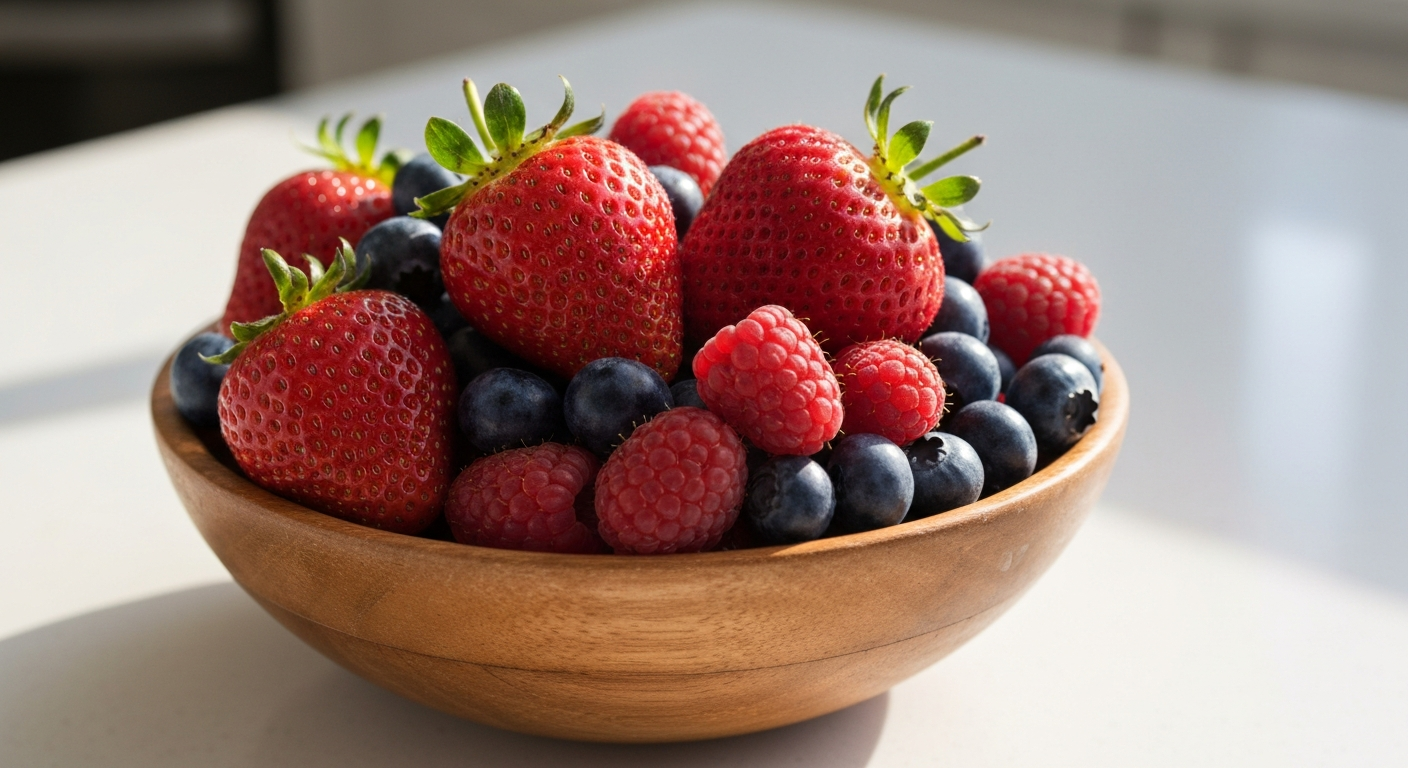
- ✅ Berries are Best: Strawberries, blueberries, and raspberries have the lowest sugar and highest fiber content.
- ✅ Watch the Portion: Even healthy fruits can spike blood sugar if you eat too much at once.
- ✅ Pair with Protein: Eating fruit with a handful of nuts or a piece of cheese slows down sugar absorption.
One of the most common myths about diabetes is that you have to give up fruit entirely because it contains sugar. While it's true that fruit contains natural sugars, it is also packed with essential vitamins, minerals, antioxidants, and fiber.
In this guide, you will learn how to choose the best low-glycemic fruits, how to control portion sizes, and the critical rule of pairing fruit with protein or fat to prevent glucose spikes. You don't have to give up nature's candy; you just have to eat it strategically.
A standard serving size for most berries.
Choose a small apple (tennis ball size) rather than a large one.
Fruit juice removes the fiber and causes rapid blood sugar spikes.
The Glycemic Index (GI) and Fruit
The Glycemic Index measures how quickly a food raises blood sugar. Foods with a low GI (55 or less) are digested slowly, causing a gradual rise. Many fruits fall into the low GI category.
- Low GI Fruits (Best choices): Berries, apples, pears, peaches, plums, cherries, and grapefruit.
- Medium GI Fruits (Eat in moderation): Bananas, melons, pineapples, and grapes.
- High GI Fruits (Limit or avoid): Dried fruits (like raisins or dates) and canned fruit in heavy syrup.
Myth vs. Fact
Myth: People with diabetes can't eat bananas or grapes.
Fact: You can eat them, but portion control is key. Half a banana or a small handful of grapes, paired with a protein like almonds, can fit into a healthy diabetes meal plan.
Expert Tip
From the Dietitian
Never eat fruit by itself. Think of fruit as needing a 'buddy.' If you eat an apple, its buddy should be a tablespoon of peanut butter. If you eat berries, their buddy should be Greek yogurt. The fat and protein from the 'buddy' slow down the digestion of the fruit's sugar, keeping your blood sugar stable.
| Fruit Category | Examples | Blood Sugar Impact | How to Eat It |
|---|---|---|---|
| The Superstars | Blackberries, raspberries, strawberries | Very Low | Eat freely (1 cup) with yogurt |
| The Staples | Apples, pears, peaches (with skin) | Low | Eat 1 small piece with nuts/cheese |
| Portion Control Needed | Bananas, grapes, pineapple, mango | Medium | Eat half a portion, always with protein |
| Avoid | Fruit juice, canned fruit in syrup, dried fruit | High | Avoid completely |
Common Mistakes to Avoid
- Drinking fruit juice: Even 100% natural juice has had the fiber stripped away. It will spike your blood sugar almost as fast as a soda.
- Peeling your fruit: The skin of apples, pears, and peaches contains the majority of the fiber. Wash them well and eat them whole.
- Eating dried fruit: Raisins, dried cranberries, and dates are highly concentrated sugar bombs. A small handful can contain as much sugar as a candy bar.
- Ignoring portion sizes: A giant 'honeycrisp' apple from the supermarket can equal three servings of fruit. Stick to fruit the size of a tennis ball.
Medical Authority & Recommendations
Who should use this advice? Anyone managing blood sugar who wants to safely incorporate fruit into their diet.
Who should avoid it? People with kidney disease need to monitor high-potassium fruits (like bananas and oranges) and should consult a renal dietitian.
What current research shows: Studies consistently show that eating whole fruits (especially blueberries, apples, and grapes) is associated with a lower risk of developing type 2 diabetes, whereas drinking fruit juice is associated with a higher risk.
The Bottom Line
Fruit is a healthy, natural part of a balanced diet. By choosing high-fiber options like berries and apples, keeping portions in check, and pairing fruit with protein, you can enjoy nature's candy without compromising your blood sugar.
Frequently Asked Questions
Is watermelon safe for diabetes?
Watermelon has a high Glycemic Index (digests quickly) but a low Glycemic Load (mostly water). A small portion (1 cup diced) is usually fine.
What about frozen fruit?
Frozen fruit is just as nutritious as fresh fruit. Just check the ingredient label to ensure no sugar has been added before freezing.
Can I eat a banana every day?
Yes, but choose slightly green bananas (they have more resistant starch and less sugar than overripe ones) and pair them with peanut butter.
Are smoothies okay?
Smoothies break down the fiber mechanically, making the sugar absorb faster. If you make a smoothie, use mostly greens, add a protein powder, and limit fruit to a half cup of berries.
Is grapefruit safe?
Grapefruit is excellent for blood sugar, BUT it interacts dangerously with many medications, including statins and blood pressure drugs. Check with your pharmacist first.
Does cooking fruit change its sugar?
Cooking fruit (like baking apples) breaks down the fiber, making the sugar absorb slightly faster. Eating it raw is best for blood sugar.
Sources & References
- American Diabetes Association (ADA). (2023). Fruit.
- Mayo Clinic. (2023). Diabetes diet: Create your healthy-eating plan.
Table of Contents
Join Our Newsletter
Get weekly health tips delivered to your inbox.
HealthyLivingAfter60 Editorial Team
Our editorial team creates evidence-based educational content focused on healthy aging, nutrition, exercise, chronic disease prevention, and wellness for adults over 60. Content is reviewed for accuracy and supported by trusted medical sources.
Read our Editorial PolicyRelated Articles