Best Breakfast for Blood Sugar
HealthyLivingAfter60 Editorial Team
Reviewed by the HealthyLivingAfter60 Editorial Team
Key Takeaways
- ✅ Protein is Essential: Aim for 20-30 grams of protein at breakfast to stabilize blood sugar and preserve muscle mass.
- ✅ Don't Fear Fat: Healthy fats from avocados, nuts, or olive oil slow digestion and keep you full.
- ✅ Fiber is Your Friend: High-fiber foods like chia seeds, berries, and oats blunt blood sugar spikes.
- ✅ Avoid Liquid Sugar: Fruit juices, even 100% natural ones, cause rapid blood sugar spikes. Eat whole fruit instead.
Breakfast sets the metabolic tone for your entire day. For adults over 60 managing blood sugar or diabetes, the traditional American breakfast of toast, cereal, or pastries can lead to an immediate glucose spike followed by a mid-morning crash.
In this article, you will learn how to build a blood-sugar-friendly breakfast by prioritizing protein, healthy fats, and fiber. We will provide practical meal swaps and explain exactly why certain foods keep your energy stable until lunch, preventing the rollercoaster of spikes and crashes.
Target amount of protein for a blood-sugar-friendly breakfast.
Target amount of fiber to help slow glucose absorption.
Ideal amount of added sugars in your morning meal.
The Anatomy of a Stable Breakfast
To prevent a morning blood sugar spike, your breakfast should include three main components:
- High-Quality Protein: Eggs, Greek yogurt, cottage cheese, or a clean protein powder. Protein takes longer to digest and does not spike blood sugar.
- Healthy Fats: Nuts, seeds, avocado, or a drizzle of olive oil. Fats delay stomach emptying, which slows the absorption of carbohydrates.
- Complex Carbohydrates (Fiber): If you eat carbs, make sure they are high in fiber. Think berries, steel-cut oats, or whole-grain seeded bread.
Myth vs. Fact
Myth: Oatmeal is always the best breakfast for diabetes.
Fact: Instant oatmeal is highly processed and can spike blood sugar quickly. Steel-cut or rolled oats are better, but they still need to be paired with protein and fat (like nuts or eggs) to keep blood sugar stable.
Expert Tip
From the Dietitian
If you love oatmeal, never eat it plain. Instant oatmeal digests almost as fast as table sugar. Always use steel-cut or thick rolled oats, and stir in a scoop of protein powder, two tablespoons of chia seeds, and a handful of walnuts. This transforms it from a glucose spiker to a slow-burning energy source.
| Food | Protein | Fiber | Blood Sugar Impact |
|---|---|---|---|
| 2 Scrambled Eggs | 12g | 0g | Zero Spike |
| Plain Greek Yogurt (1 cup) | 20g | 0g | Minimal Spike |
| Chia Seeds (2 tbsp) | 4g | 10g | Stabilizes |
| Instant Oatmeal (Plain) | 4g | 4g | Moderate Spike |
| Bagel (Plain) | 9g | 2g | Severe Spike |
Common Mistakes to Avoid
- Drinking orange juice: It is liquid sugar without the fiber of the whole fruit. It will spike your blood sugar instantly.
- Eating 'healthy' granola: Most store-bought granolas are loaded with honey or maple syrup.
- Skipping protein: A breakfast of just fruit and toast will leave you hungry in an hour and cause a massive glucose spike.
- Using flavored yogurts: Fruit-on-the-bottom yogurts often have more sugar than a candy bar. Buy plain yogurt and add your own berries.
Practical Examples
The Spike Breakfast
Meal: A plain bagel with low-fat cream cheese and a glass of orange juice.
Result: Over 70g of refined carbs with almost zero protein. Severe blood sugar spike followed by a crash and intense hunger at 10 AM.
The Stable Breakfast
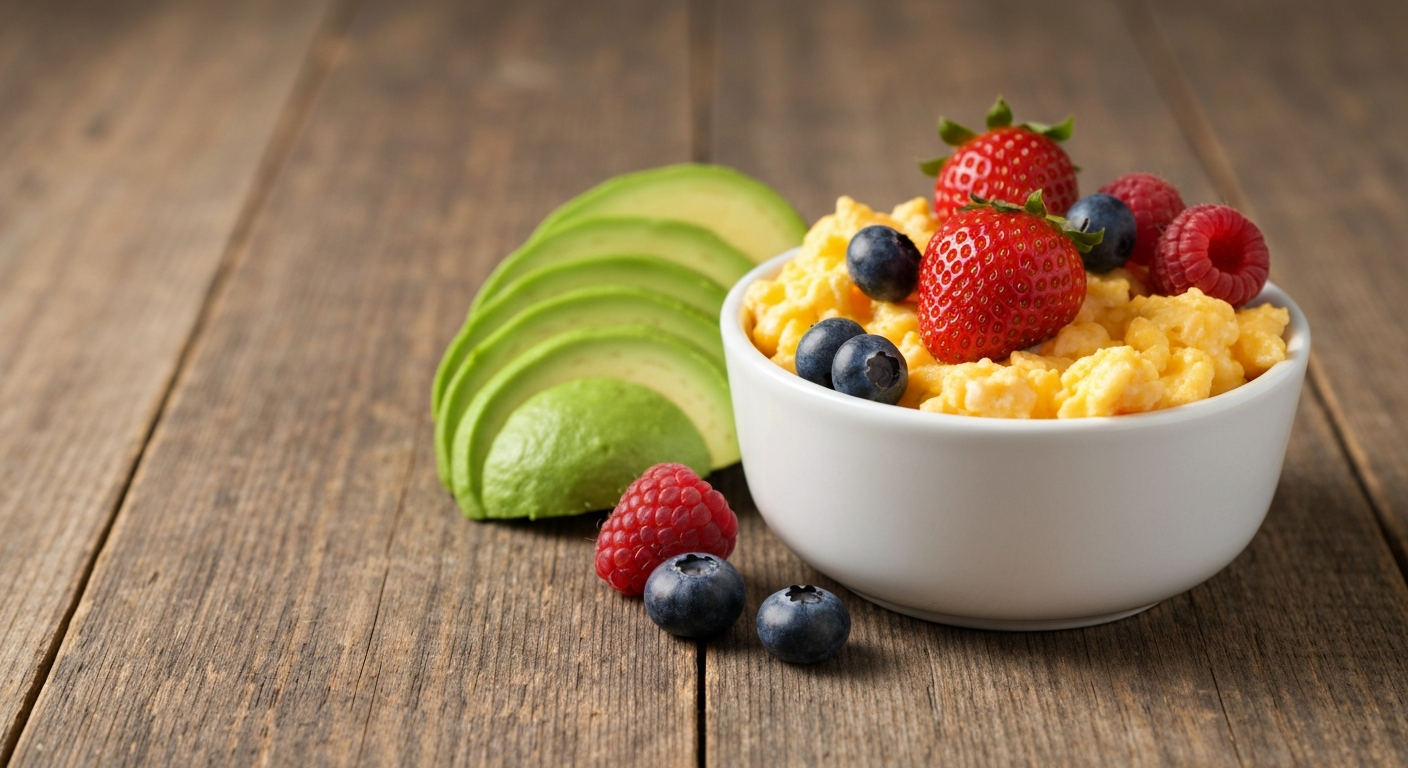
Meal: 2 scrambled eggs, 1 slice of sprouted grain toast with avocado, and black coffee.
Result: 20g of protein, high fiber, and healthy fats. Gentle glucose rise and sustained energy until lunchtime.
The Bottom Line
By shifting your breakfast focus from refined carbs and sugars to protein, healthy fats, and fiber, you can prevent morning spikes, reduce cravings, and maintain steady energy throughout the day.
Frequently Asked Questions
Is it okay to skip breakfast if I have diabetes?
It depends on your medications. If you take insulin or sulfonylureas, skipping meals can cause dangerous low blood sugar. Always check with your doctor.
What is the best milk for my morning coffee?
Unsweetened almond milk, soy milk, or a small splash of heavy cream have very few carbs. Cow's milk and oat milk contain more carbohydrates.
Can I eat bacon and sausage?
While they don't spike blood sugar, they are high in saturated fat and sodium, which is bad for heart health. Lean turkey sausage or eggs are better choices.
Are protein shakes a good breakfast?
They can be, provided they are low in sugar (under 5g) and high in protein (20g+). Avoid shakes marketed as 'meal replacements' if they are loaded with sugar.
Is sourdough bread better than wheat bread?
Sourdough undergoes fermentation, which lowers its glycemic index slightly compared to standard white bread, making it a slightly better choice, but portion control is still required.
Can I eat fruit for breakfast?
Yes, but stick to low-glycemic fruits like berries, and always pair them with a protein, like Greek yogurt or a handful of nuts.
Sources & References
- American Diabetes Association (ADA). (2023). What Can I Eat?
- Centers for Disease Control and Prevention (CDC). (2022). Diabetes Meal Planning.
Table of Contents
Join Our Newsletter
Get weekly health tips delivered to your inbox.
HealthyLivingAfter60 Editorial Team
Our editorial team creates evidence-based educational content focused on healthy aging, nutrition, exercise, chronic disease prevention, and wellness for adults over 60. Content is reviewed for accuracy and supported by trusted medical sources.
Read our Editorial PolicyRelated Articles